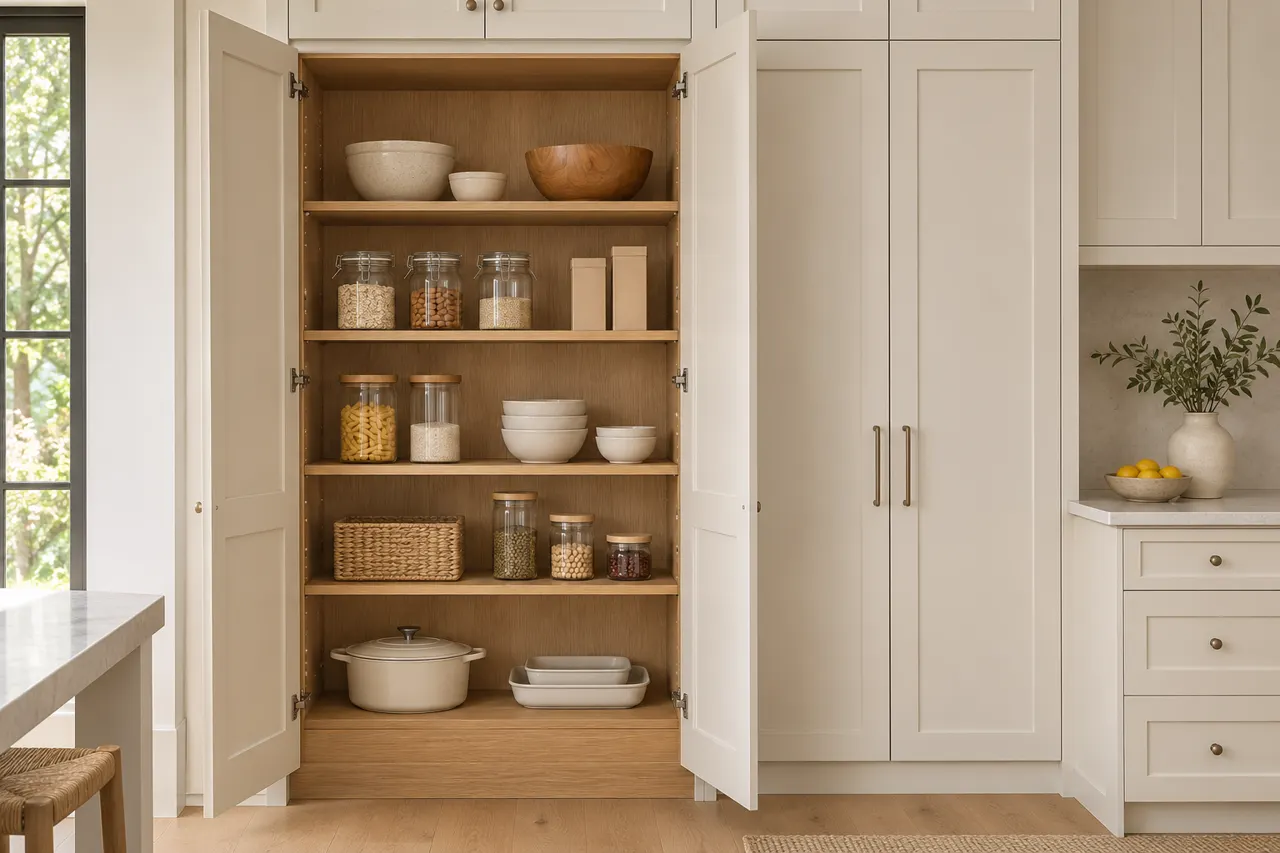
Follow the food preparation groups
A pantry can be organized around breakfast, baking or regular meal preparation. Describe those groups before allocating shelves.
Follow a familiar routine such as making breakfast or preparing a baking recipe. Identify the ingredients used together and the surface where they are measured. That sequence gives the pantry layout a more useful basis than grouping every package only by its shape or height.
- Routine: Name the preparation task.
- Ingredients: List the supplies it uses.
- Return: Discuss where opened packages go back.
Grouping by package size and grouping by use lead to different arrangements. Compare both when deciding which contents should stay together. State the food groups that the pantry layout is intended to support.
Connect the pantry to a useful landing surface
Think about where groceries or appliances are set down while the pantry is opened. That nearby surface affects how the storage is used.
Show the nearby counter on the pantry drawing and think through carrying groceries from the entrance. Heavy or awkward items may need to be set down before the door is opened. A practical relationship between storage and landing space can matter more than another bank of tall cupboards.
- Landing: Show the nearest useful counter.
- Doors: Check movement beside that surface.
- Contents: Identify items moved between the two.
A larger pantry is one option, while a better relationship with the landing area may improve handling without increasing capacity. Show the pantry opening and adjacent landing position on the room plan.
Give tall containers an appropriate opening
Oil bottles, cereal containers and other tall packages can set the useful shelf spacing. Include their lids and handling requirements.
Leave the lid and normal handling in the measurement discussion. A bottle that fits beneath a shelf while standing still may be awkward to lift out. Ask which openings can be adjusted later and which dimensions are fixed by the proposed cabinet construction or hardware.
- Height: Measure the complete container.
- Removal: Allow for the way it is lifted out.
- Adjustment: Ask which shelves can move.
Increasing every shelf opening wastes space around shorter packages. Compare a few deliberate heights rather than one repeated spacing. Specify which shelves adjust and which openings are fixed.
Separate active ingredients from reserve stock
Opened everyday ingredients and bulk replacements do not need identical access. Divide those groups before assigning the pantry shelves.
Describe how groceries are put away as well as how ingredients are retrieved. A clear place for replacement stock helps distinguish an unopened package from one already in use. Compare that replenishment routine with the proposed shelf arrangement before choosing extra storage simply to accommodate unsorted overflow.
- Daily food: List ingredients used frequently.
- Reserve: Identify unopened replacement stock.
- Replenishment: Discuss how supplies are put away.
Keeping all stock together is simple to describe but can hide what is already open. An intentional division can make the contents easier to review. Show the active and reserve storage positions in the pantry brief.
Keep serving pieces apart from groceries
Occasional platters and serving bowls place different demands on a pantry from everyday ingredients. Give those contents their own brief.
A platter may need a wider usable opening than the groceries stored alongside it. Separate those requirements in the pantry request. Occasional serving pieces can share a cabinet wall with food storage, but their compartment should not be an accidental gap left after the smaller shelves are assigned.
- Pieces: Measure the larger serving items.
- Frequency: Describe how often they are used.
- Access: Check the removal route.
A tall pantry can hold both groups with a deliberate division. Avoid forcing wide serving pieces into openings chosen for small food packages. Identify the compartments intended for serving pieces in the cabinet schedule.
Distinguish appliance storage from appliance operation
A pantry compartment may hold equipment that is carried to a worktop. Operating equipment inside a cabinet is a separate question for the actual product requirements.
Include handles, attachments and loose parts when describing a stored mixer or similar appliance. Show where it will be placed after removal. Keeping equipment behind a door and operating it inside that enclosure are different proposals; the equipment's actual instructions and installation requirements need separate consideration.
- Model: Share the equipment information.
- Movement: Show how it is removed.
- Connections: Identify required access.
Concealed storage can clear a counter, but its opening must suit the complete appliance. Appearance does not establish suitability for operating it in place. Identify the stored appliances and the intended use of each compartment.